





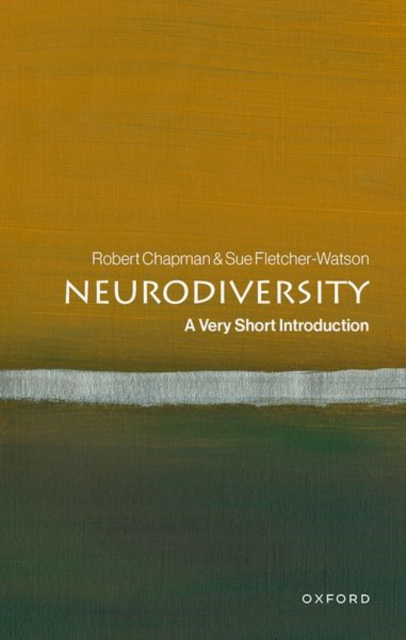

Neurodiversity: A Very Short Introduction
12,99 €
Neurodiversity is the idea that human brains function in a variety of ways. By understanding that people take in, process, and respond to information differently, we can appreciate how these profound differences affect the ways in which we experience the world and form relationships with one another. In spite of the central simplicity of this concept, the consequences of fully understanding and exploring neurodiversity can be transformative.
This Very Short Introduction looks at how neurodiversity has been understood in a variety of settings including education, research, workplace, health and social care, and criminal justice. Robert Chapman and Sue Fletcher-Watson also draw out interesting connections to models of disability, human rights, anti-capitalism, and intersectionality. Alongside this, they discuss how issues of gender, sexuality, neuroqueering, and decoloniality bear on neurodiversity. The book is an engaging read for students, thinkers, and practitioners interested in neurodiversity and its links to philosophy, psychology, sociology, political theory, medicine, and biology.

Наличие в магазинах

Детали

 Сравнить размеры
Размер книги

Расчет производится с учетом средней скорости чтения, при которой на прочтение 200-250 слов уходит две минуты.
 Крупнейший продавец книг в Эстонии
 Программа лояльности
 Бесплатная доставка при заказе свыше €39
 Самая быстрая доставка от 2 часов
Copyright © 2026 www.rahvaraamat.ee. Все права защищены.
Rahva Raamat AS, 10421903, Теллискиви 60/2 (I-корпус), Таллинн, 15073, Эстония