





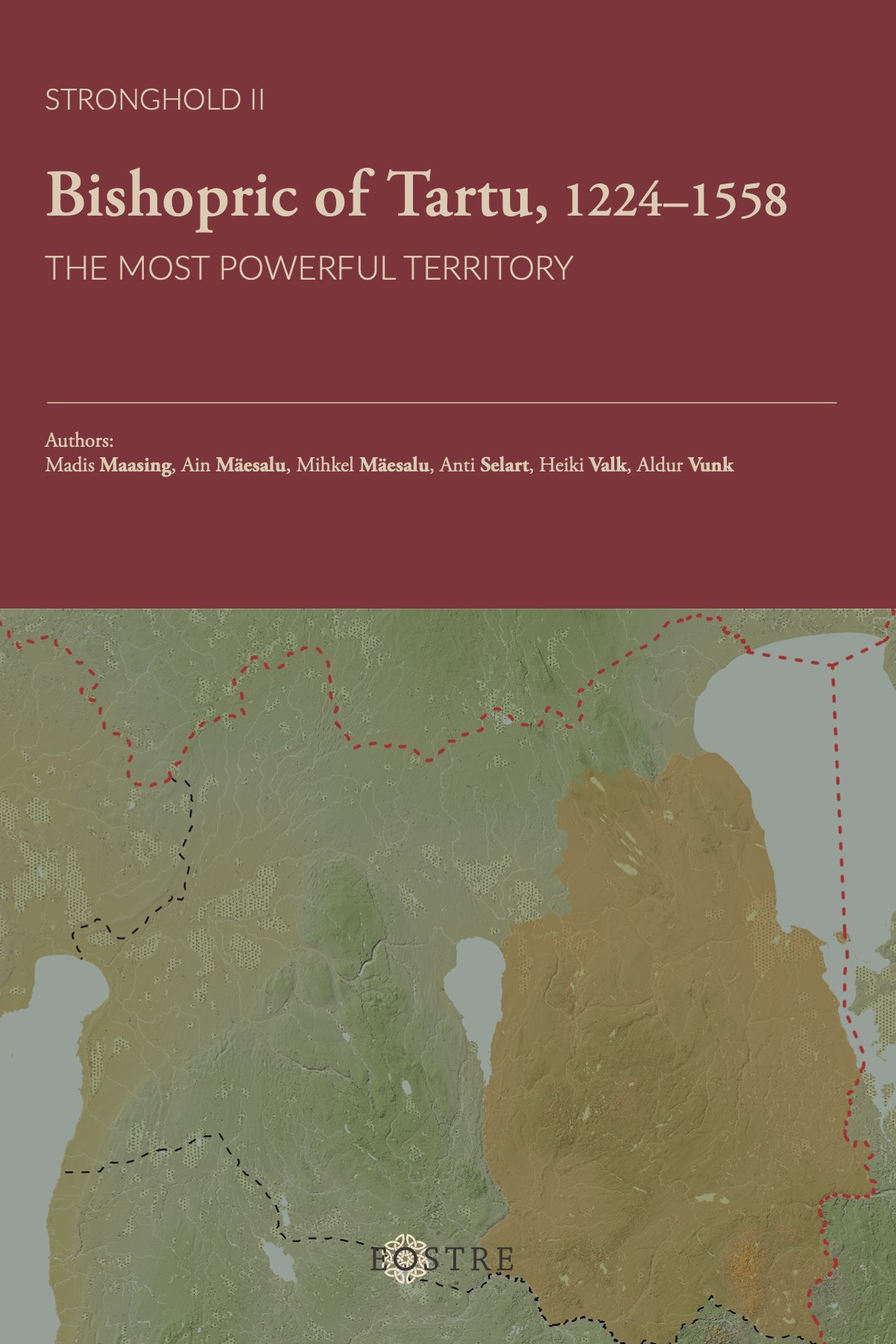

Bishopric of Tartu, 1224–1558. The Most Powerful Territory
52,99 €
„It would be better for us, if this stift [of Tartu] came into the hands of a good man, who is born in this land as we are and who is our friend and patron as he is of our Order, rather than it fell into the hands of an outlandish man.“
Thus did Wennemar von Brüggenei, Land Master of the Teutonic Order, describe his opinion in 1400. Yet, the statement was true throughout the Medieval period: if the Bishop of Tartu supported the Teutonic Order, the Order’s star in Livonia was on the rise, as the other bishops could not stand against the two. 17th century chronicler Christian Kelch kept this in mind when he described this territory as the most powerful in Livonia.
The bishopric which was created after the conquest of Tartu in 1224 lasted until 1558 when it surrendered to Russian troops. Thus did the “most powerful” fall as the first. How did the twists of fate, otherwise known as the choices of the bishop and his estates, lead to that outcome? What were the problems the Bishops of Tartu faced and how did these change throughout the Medieval period? These questions are answered through the reigns of the 27 known bishops and the power structures of the bishopric.
In addition to the history of the bishopric, the history and development of the town of Tartu, the principality’s episcopal castles (Vana-Kastre, Kirumpää, Kastre, and Vastseliina), and feudal castles, the most well known of which is Rõngu, are described. The descriptions are supported by maps and reconstructions, taking into account the most recent archaeological surveys.

Saadavus kauplustes

Detailid

 Võrdle suurust
Raamatu suurus

Arvutus põhineb keskmisel lugemiskiirusel, kus 200-250 sõna lugemiseks kulub 2 minutit.
 Eesti suurim raamatumüüja
 Eripakkumised püsiklientidele
 Tasuta tarne tellimustele üle 39 €
 Kiireim tarne alates 2 tunnist
Copyright © 2026 www.rahvaraamat.ee. Kõik õigused kaitstud.
Rahva Raamat AS, 10421903, Telliskivi 60/2 (I-hoone), Tallinn, 15073, Eesti