





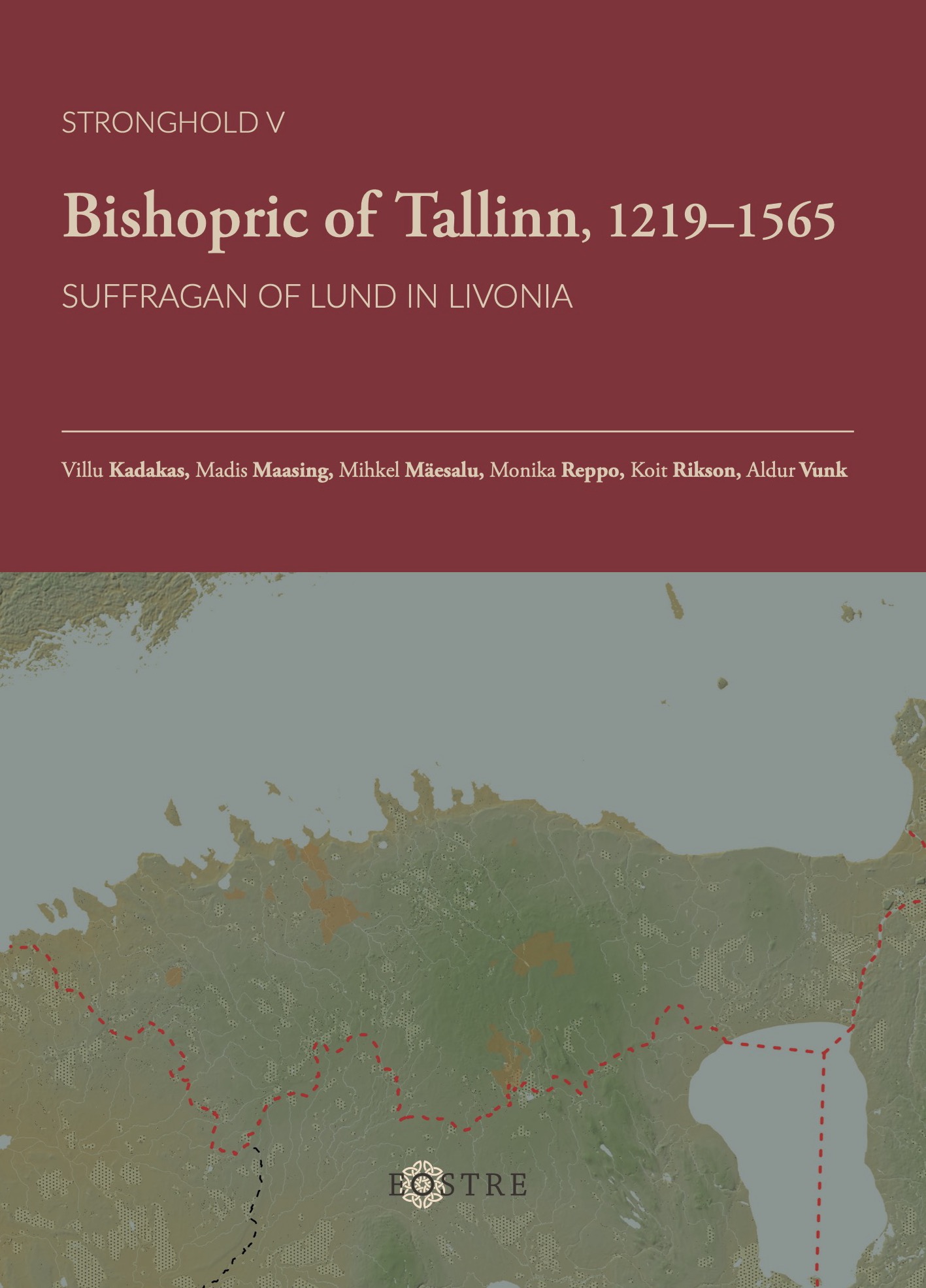

Bishopric of Tallinn, 1219–1565. Suffragan of Lund Livonia
38,99 €
"…we consider it superfluous, as well as unnecessary, to inform [the bishops of] Tallinn and Courland, who move and stay themselves in everything by the wishes and opinions of the aforementioned three [the Land Master, the Archbishop of Riga, and the Bishop of Tartu]…"
This was Margrave Wilhelm’s opinion of the power of the bishop of Tallinn in 1539. For Christian Kelch, the diocese of Tallinn was “the smallest”. Yet, following Danish examples, the diocese was headed by a member of the high clergy, an international diplomat, a large landowner, and an advisor to his ruler. Unlike the bishops of Saare-Lääne and Tartu, the bishops of Tallinn are not known to have participated in battles with any heroics, but their trips to the Danish royal court, the residence of the Grand Master of the Teutonic Order, and elsewhere may have been more important than combat.
The bishops’ lack of secular power did not mean that they did not experience conflicts within their diocese. Danish kings regularly ignored the right granted to the Tallinn cathedral chapter at the end of the 13th century to elect its own bishop; later, the Teutonic Order tried to retain the right to appoint bishops. Confrontations between the bishop and the city of Tallinn also emerged strongly from time to time, especially after the Reformation.
In this title, we describe these disputes and the relevance of the bishop of Tallinn in the medieval world, including an overview of the history of the short-lived Virumaa diocese which was later merged with Tallinn. In addition, we also investigate the stories of two episcopal castles built by the bishops of Tallinn – Kiviloo and Porkuni – and the episcopal palace on Toompea. The texts are accompanied by maps and illustrations.

Saadavus kauplustes

Detailid

 Võrdle suurust
Raamatu suurus

Arvutus põhineb keskmisel lugemiskiirusel, kus 200-250 sõna lugemiseks kulub 2 minutit.
 Eesti suurim raamatumüüja
 Eripakkumised püsiklientidele
 Tasuta tarne tellimustele üle 39 €
 Kiireim tarne alates 2 tunnist
Copyright © 2026 www.rahvaraamat.ee. Kõik õigused kaitstud.
Rahva Raamat AS, 10421903, Telliskivi 60/2 (I-hoone), Tallinn, 15073, Eesti